
Embedded Wallets 101 in 2026: Onboard Users via Email or Social Login
Embedded wallets give users a non-custodial crypto wallet at signup, with no seed phrase needed. Learn how they work in 2026 and how to add one with Para.

• What embedded wallets are
• Why they’re essential for user-friendly crypto apps
• How they work behind the scenes
• How you can add an embedded wallet to your app using Para, complete with white-labeling and social logins
This guide has been updated in September 2026 to reflect the latest data in the market.
If you’re building a crypto or fintech app and want users to log in with their email, Google, or social accounts (without installing a wallet, managing seed phrases, or dealing with browser extensions), you’re likely looking for an embedded wallet solution.
Looking for a comparison of embedded wallets? Check out our guide
What Are Embedded Wallets?
An embedded wallet is a crypto wallet that lives inside your app and is created automatically when a user signs up or logs in.
Rather than bouncing between apps to handle transactions, users can spin up wallets directly within the application itself – cutting down friction and keeping the experience seamless. No need to leave the app or open a separate browser just to sign and approve transactions.
The crypto wallet landscape has quickly shifted from standalone wallets to embedded wallets like Para, redefining how users transact onchain.
Watch Nitya Subramanian, Founder and CEO of Para, on the evolution of wallets in crypto:
What’s the Difference Between Metamask or Phantom and an Embedded Wallet Like Para?
Unlike traditional crypto wallets, embedded wallets don’t require users to download a separate app like MetaMask or Phantom in order to interact with a crypto application. There's also no need for users to manage seed phrases, or even know they're using crypto rails.
Instead, they can sign in with email, Google, or another social account, and embedded wallets like Para handle wallet creation and signing in the background.
Embedded wallets make crypto applications feel like modern, web2 software with all the crypto infrastructure hidden behind the scenes.
Why Use Embedded Wallets?
If you're building a consumer-facing crypto or fintech product, embedded wallets offer the fastest, simplest onboarding experience for your users.
With embedded wallets, you can:
- Enable wallet creation at sign-up (or even before) by abstracting away seed phrases. Try it for yourself here!
- Keep users inside your app, with no browser popups or redirects
- Let users access balances, send/receive tokens, and sign transactions without touching private keys
How Embedded Wallets Like Para Work
Here's how an embedded wallet typically works in your app:
- User signs up or logs in with email or social account (e.g., Google, Apple).
- Behind the scenes, a non-custodial wallet is created or loaded for them.
- The private key is generated using Distributed MPC.
- When a blockchain action is needed (like sending USDC), the user signs the transaction, with no user popup or browser extension needed.
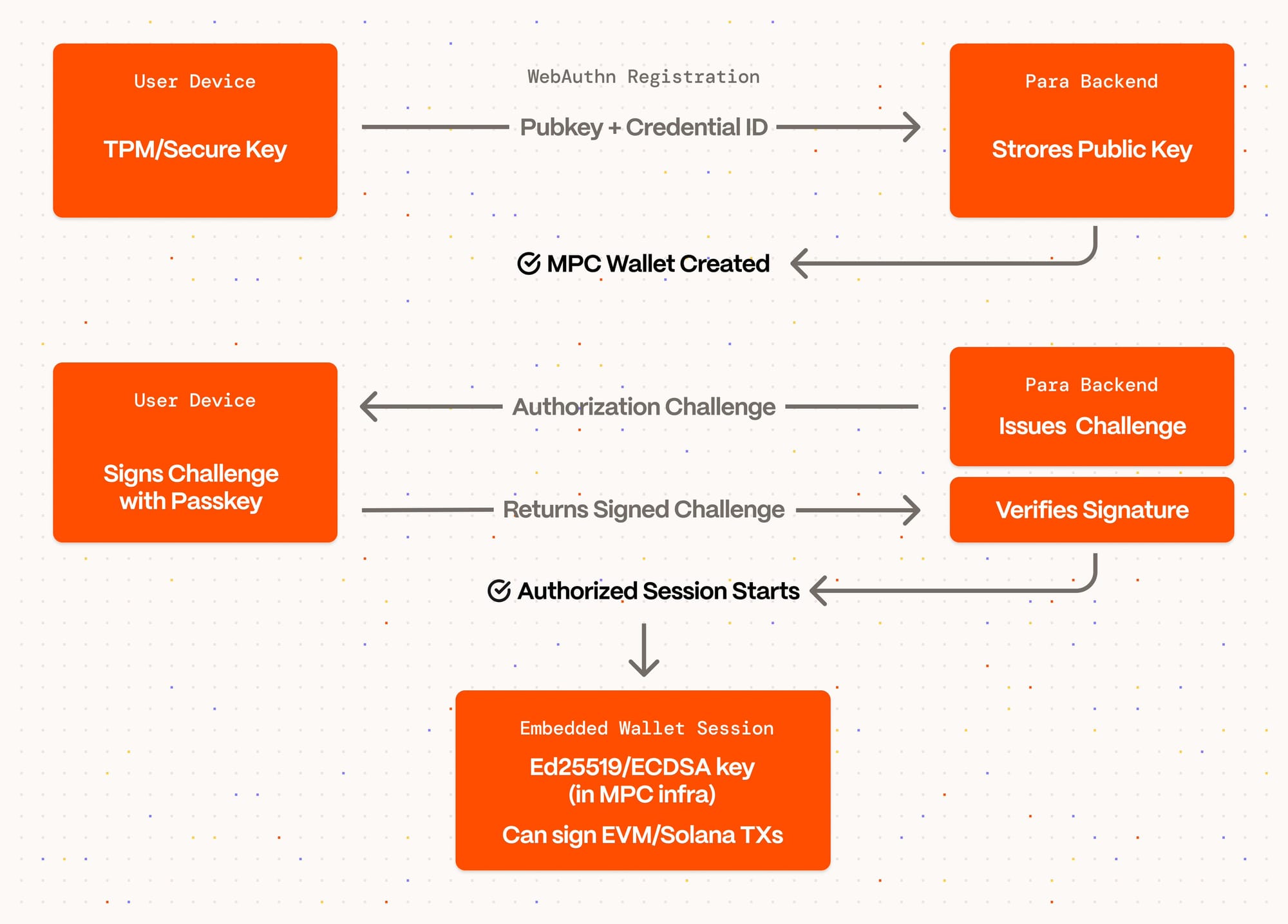
From the user’s perspective, the signing experience feels just like a typical Web2 app, but under the hood, users are transacting onchain.
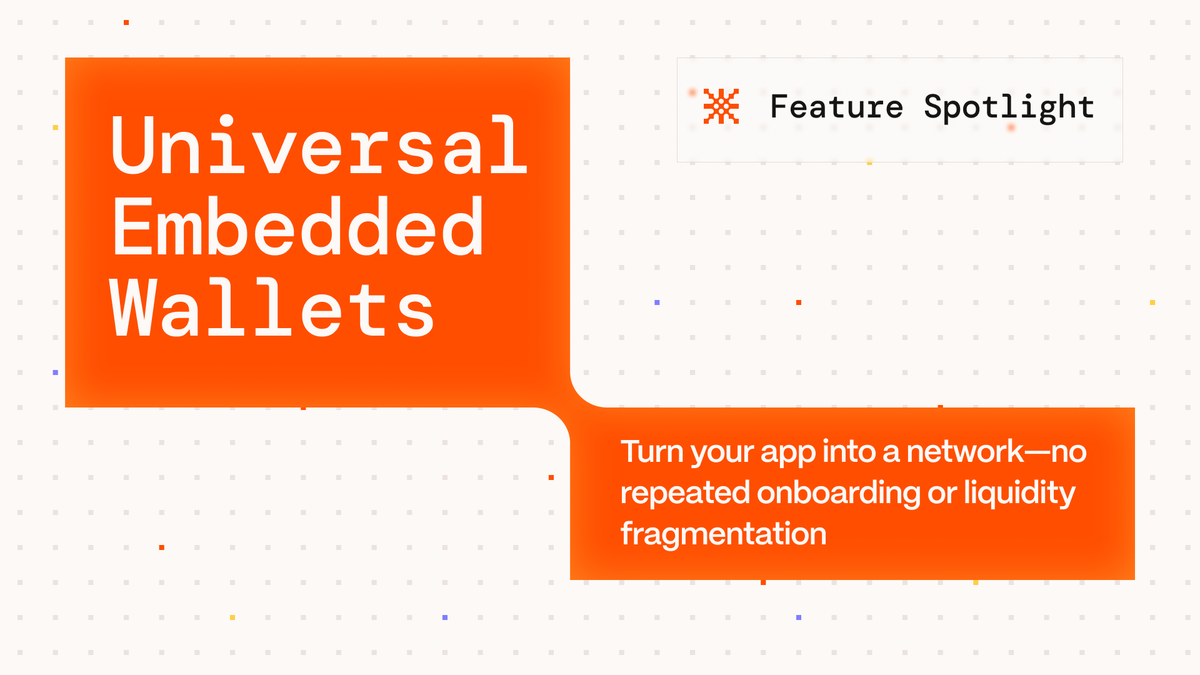
Para embedded wallets are also universal, letting users move seamlessly across apps and ecosystems without re-onboarding or manual key exports. Learn more below:
 Nitya Subramanian
Add Embedded Wallets to Your App with Para
Para allows you to easily add embedded wallets to your app, via secure, developer-friendly SDKs that let you:
- Create wallets on sign-up or login with web2 authentication methods
- Let users hold and transfer assets
- Create a fully white-label experience to match your brand
Para is designed specifically for developers building user-facing crypto products and implementing wallet onboarding at scale, giving you full control, modern APIs, and seamless integration.
Features of Para Wallet-as-a-Service
No seed phrases, no extensions, no crypto experience required
Google, Apple, Facebook
Discord, Farcaster, Telegram, X (Twitter).
Bring your own identity provider with Custom OIDC.
Branded everything: from domains to themes to copy
Secure by default, ideal for mobile-first flows
MPC architecture with secure, distributed signing
SOC 2 Type II certified.
Users keep balances and on-chain identity between products
No extra setup when switching apps built on Para
Built for Solana, Ethereum, Stellar, Sui and modular stacks
Compatible with both embedded and external wallets
Ideal for multi-chain apps and shared infra
Optimized for savings, payments, and on/off-ramps
Build across a variety of fintech verticals like Remittances, Embedded Finance, Agentic Payments, and more.
Scoped permissions and transaction policies that set what agents can sign
Native SDKs for Flutter, React Native, iOS, and Android
Clear APIs for auth, wallet creation, and transaction signing
Works across mobile, desktop, and server
How to Get Started With Embedded Wallets
Adding Para to your app is simple:
- Sign up for Para
- Install the SDK in your frontend
- Enable your login methods (email, Google, Apple, etc.)
- Para handles wallet creation and key management
- Your users are ready to send, receive, and hold tokens.
Why Top Teams Build with Para
Para is built for developers who care about UX, security, and scale and today supports 15M+ users across 100+ applications.
1) Instant onboarding, no crypto experience required
With Para, users can sign up using email, phone, or social logins, and get a non-custodial wallet instantly. No requirement to install extensions or save seed phrases. No crypto knowledge required.
2) Cross-Platform and Always Non-Custodial
Para uses Distributed MPC to protect user keys without ever storing them in one place – keys never exist in full. From the user's perspective, it feels like a simple, web2 login. Para's SDKs are built mobile-first with out of the box support for passkeys to enable secure, passwordless sign-ins across devices. They are also flexible and available on every major platform (React, Flutter, Swift, Server, and more) so that you can easily create wallets, sign transactions, and manage auth.
3) Universal
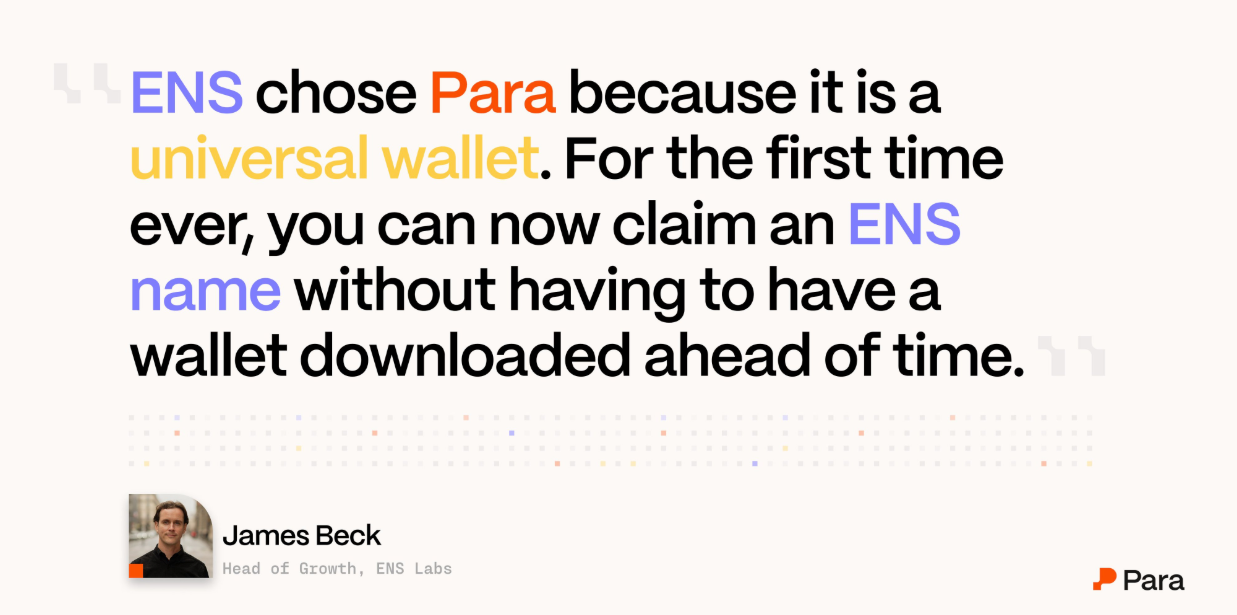
Every user gets a Universal Embedded Wallet that works across any app that integrates Para. When users try a new product in your ecosystem, there’s no extra onboarding or wallet setup. Their balances and onchain identity just carry over.
4) Optimized for Stablecoins
Whether you're building embedded finance products, remittances, or agentic payments Para is optimized for stablecoin-first experiences. It supports major assets like USDC and PYUSD across chains, with low latency and high reliability.
Para works with fintechs like S&P Global, Centrifuge, Coala Pay, Decal, and Colossus.
FAQs
Are embedded wallets custodial?
Not with Para. Para wallets are non-custodial by design. Para uses Distributed MPC so private keys never exist in full in any single place, and Para never holds user keys or funds. Para is also SOC 2 Type II compliant.
Do users need a seed phrase to use an embedded wallet?
No. Users sign in with email, phone, passkeys, or social accounts like Google and Apple, and a wallet is created for them automatically. There's nothing to download and no seed phrase to write down.
Can AI agents use embedded wallets?
Yes. Para's REST API lets developers create and manage wallets for AI agents. Scoped permissions and transaction policies set what each agent can sign, where, and how much, so agents can transact within limits you define.
Which chains does Para support?
Para supports Ethereum and EVM chains, Solana, Stellar (including Soroban smart contracts), Sui, Canton Network, Tempo, and Cosmos. Para is compatible with both embedded and external wallets, which makes it a fit for multi-chain apps.
Can embedded wallets hold and send stablecoins?
Yes. Para embedded wallets support major stablecoins like USDC across chains. Apps can also offer same-chain and cross-chain swaps through Paxos Labs Transit and yield through Osero Earn. Teams use Para for remittances, payments, payouts, and embedded finance.
Interested in integrating an embedded wallet into your app? Let’s talk.