
How Decal Brought Stablecoin Payments to Merchants, and Processed $4.1M Doing It
Restaurants lose up to 3.5% on every card transaction and wait days for settlement. Decal built a stablecoin payments rail on Solana that drops into existing point-of-sale systems, and it has already processed $4.1M for merchants. Learn more.

Most payment infrastructure asks merchants to change everything: new hardware, new checkout flows, new logic for staff to learn. Decal took the opposite approach. The team built a way for merchants to accept stablecoin payments through the point-of-sale systems they already run, with no new terminals and no new workflow.
The result is a payments experience that feels familiar to customers and cheaper for businesses. And the numbers back it up.
The Numbers so Far
- $4,100,000+ processed through Decal.
- 42,000+ payments completed.
- 7% APY earned on merchant balances.
Up to 5.7% more revenue kept per transaction compared to traditional card processing.
These figures tell a clear story: stablecoin payments are a working revenue line today, running across real storefronts in real cities.
What Decal Solves
Merchants operate on thin margins, and card processing quietly erodes them. A typical processor charges around 3.5% per transaction and holds funds for days before settlement. For a business doing meaningful volume, that combination of high fees and slow payouts is a structural drag on cash flow.
Stablecoins settle in seconds and carry a fraction of the cost of card networks. The hard part was never the technology. It was making that technology disappear into a checkout customers and staff already understood.
Building on Infrastructure that gets out of the way
Decal is built on Solana and powered by Para. Para provides the wallet infrastructure underneath Decal's payment experience. Customers scan a QR code, choose how to pay, and confirm. There is no app to download, no signup, and no learning curve.
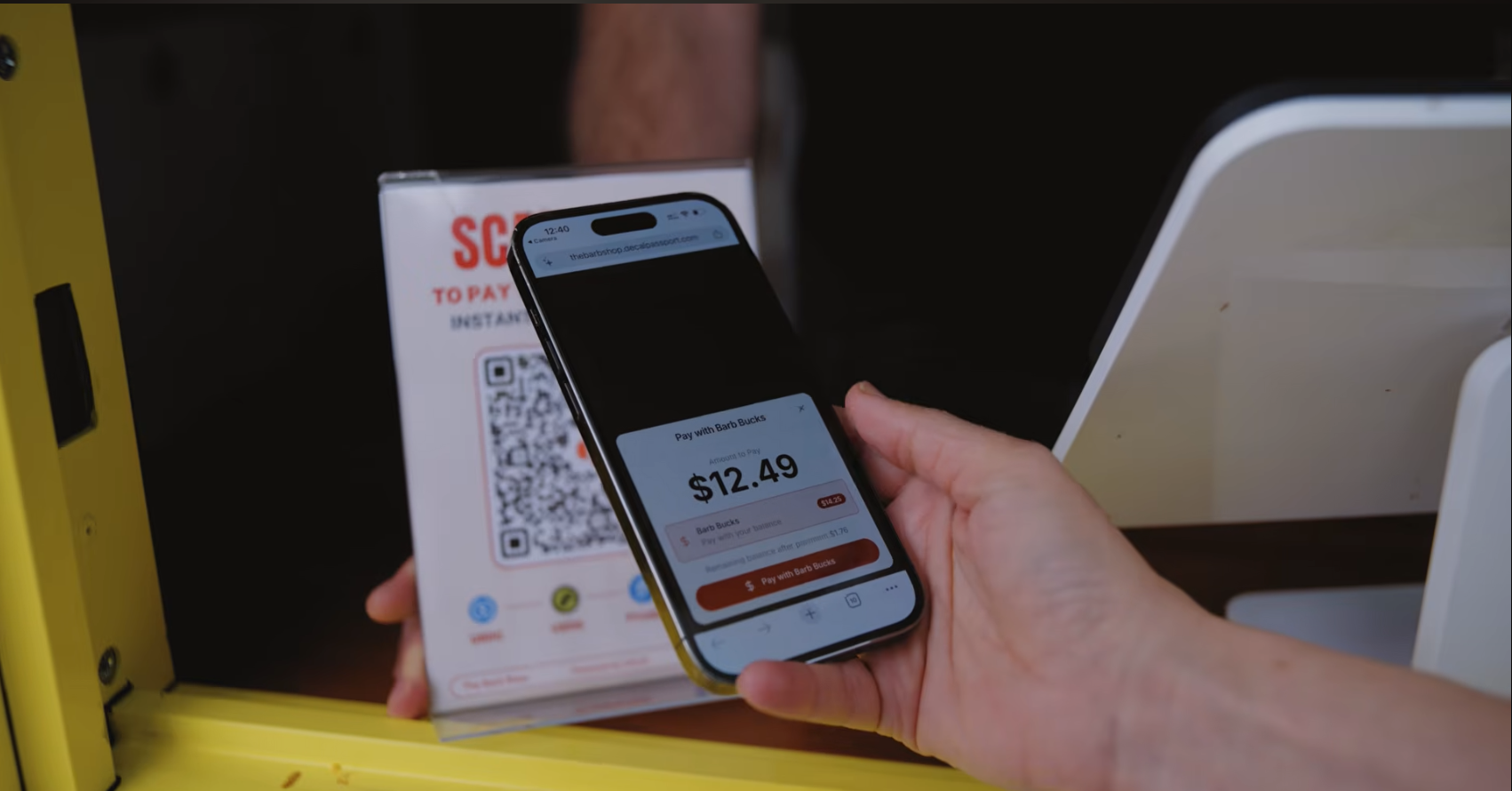
Behind that simplicity, Para's embedded wallets handle the wallet interactions so neither the merchant nor the customer has to think about keys, networks, or signing. Merchants and their customers get a payment experience that feels like any modern web checkout, while the security model underneath is built for enterprise-grade scale. For Decal, this means shipping a consumer-grade product without building wallet infrastructure from scratch.
Decal in the Wild
Decal's early traction comes from exactly the kind of merchants the product was designed for.
At Raposa Coffee in New York, Decal powered a month-long popup, onboarding customers to onchain payments through the shop's existing Square terminal. Co-Founder Brandon Jimenez described it as a strong onboarding moment for customers, with the Decal team guiding the shop through the full process.
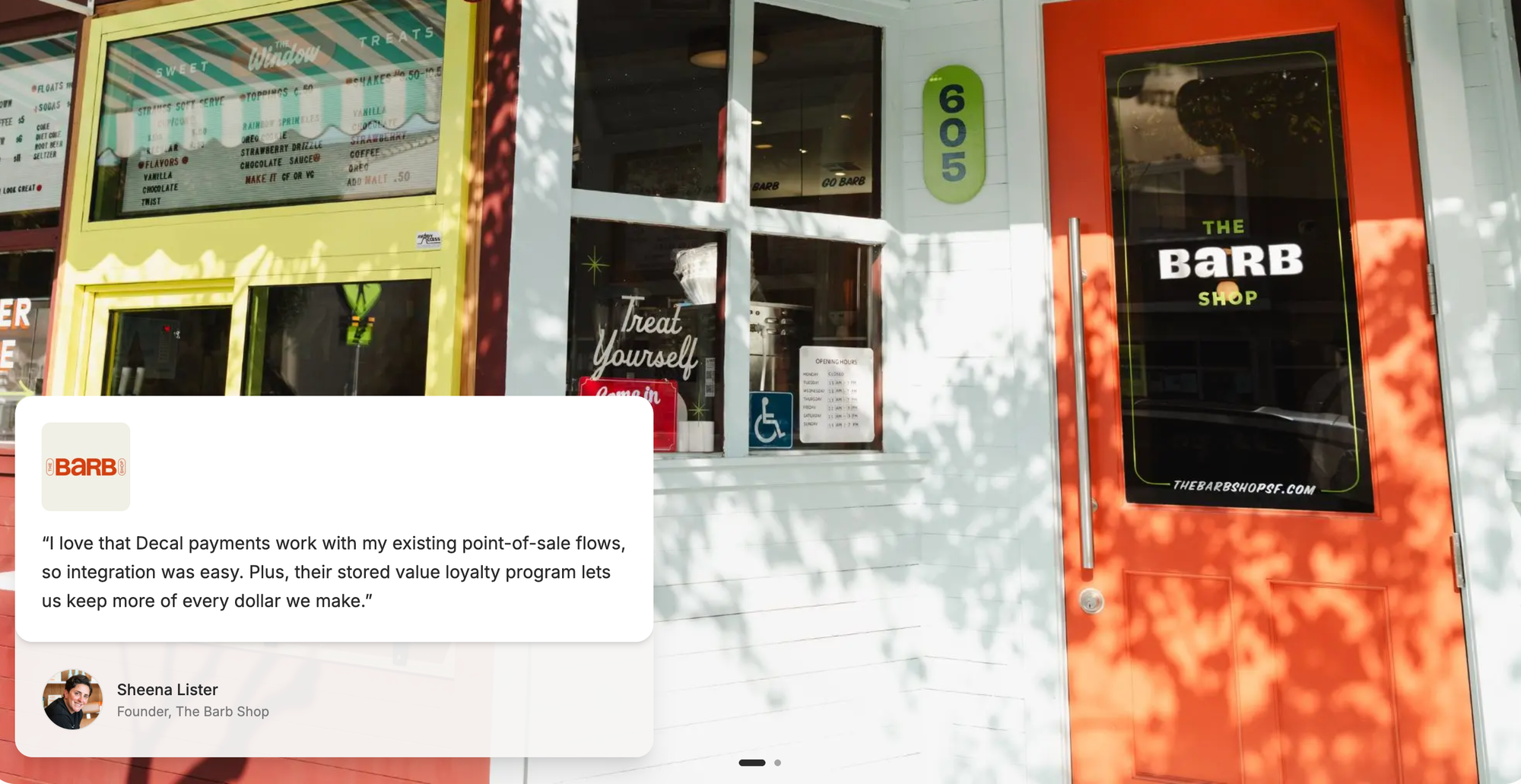
The Barb Shop in San Francisco points to a different benefit. Founder Sheena Lister noted that Decal worked with her existing point-of-sale flows, which made integration straightforward, and that the stored value loyalty program helps the business keep more of every dollar it earns.
Decal's Stored Value program funds rewards from the yield earned on customer balances rather than from merchant margins. When a customer preloads $25, $50, or $100, that balance earns interest, and that interest covers the rewards program. Loyalty stops being a discount the merchant absorbs and becomes a growth engine that pays for itself.
Why this Matters
Stablecoin payments work best when the infrastructure underneath is invisible. Customers should not have to know what a wallet is. Staff should not have to relearn checkout. Merchants should just see lower fees, faster settlement, and a new line of yield.
$4.1M processed and 42,000+ payments in, Decal is proof that onchain payments can feel completely ordinary at the counter.
→ See what Decal is building at usedecal.com