99% Faster, 100% Reliance: How Para helps Coala Pay Transform the Humanitarian Aid Industry
Coala Pay is a blockchain-based payment platform designed to solve a persistent challenge in the aid industry: moving funds into restricted corridors where traditional banking is slow, unreliable, or unavailable. Founded by experienced humanitarians, the platform uses stablecoins and smart contracts to deliver instant, cross-border liquidity for institutional organizations managing budgets between $500 million and some upwards of $3 billion.
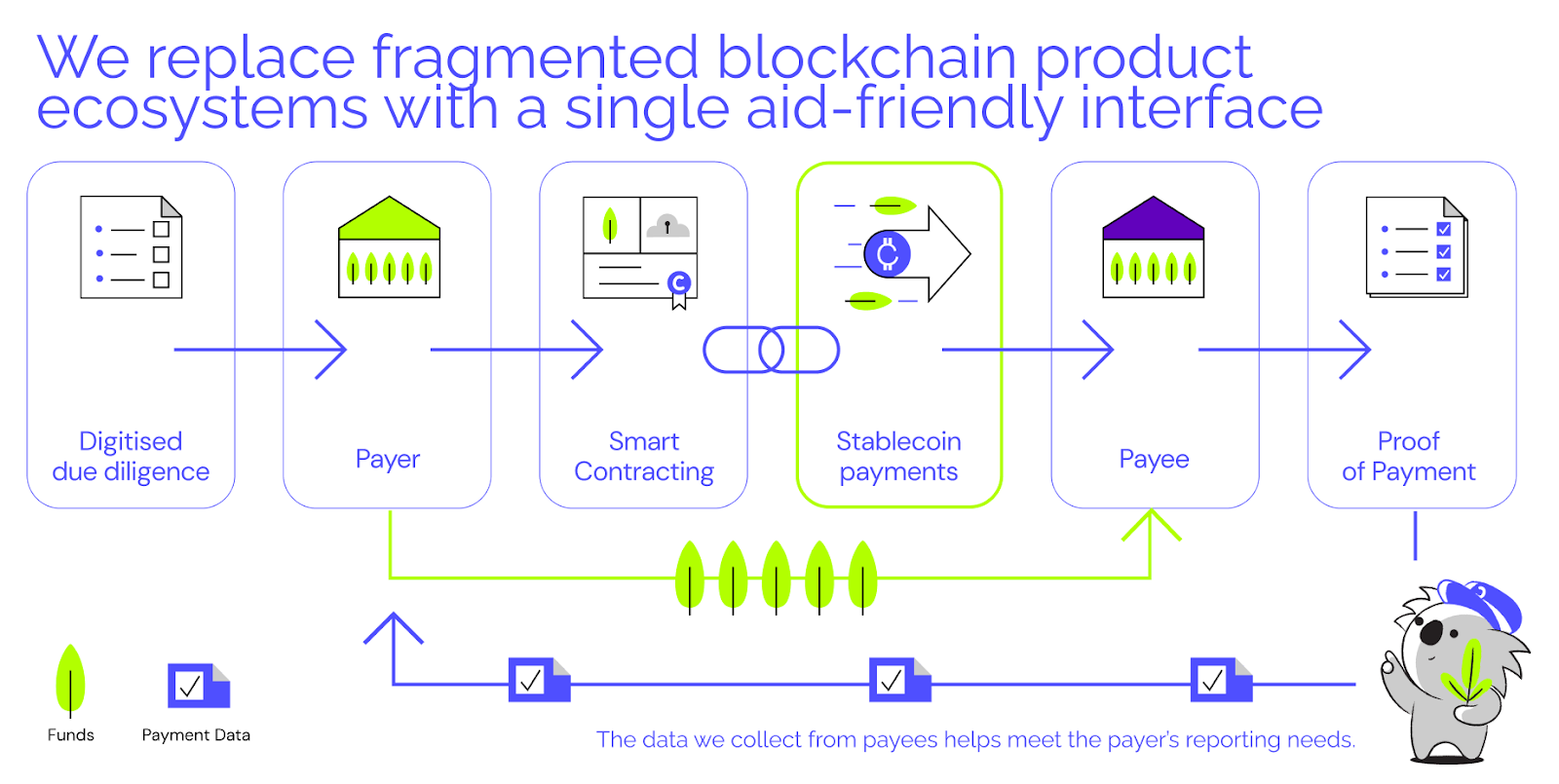
While humanitarian aid demands strict public-fund accountability, it also requires capital to move rapidly through these fragile environments. As an early mover bringing blockchain to the sector, Coala Pay achieves this by focusing on the large-scale transfers between headquarters, regional and local field offices, implementing partners, and vendors that make up 80% of all aid spending.
By targeting these large B2B flows, the platform ensures vital funds completely bypass legacy banking delays, cutting out the multiple currency conversions and volatile exchange rate fluctuations that typically drain aid value before it reaches the field.
The Hidden Costs of Moving Aid
Moving public sector funds to crisis zones through traditional banking networks is often slow, costly, and inefficient.
→ Delays and Risk: Using traditional legacy banking, it can take up to 30 days to reconcile payments and reimburse local FSPs and cash agents. Even sending funds between an aid organisation’s own bank accounts can take several weeks. During these delays, funds are often exposed to extreme foreign exchange (FX) fluctuations, and lose significant value to fees and intermediaries.
→ Strict Budget Constraints: This volatility is especially risky because public sector aid funding typically allows only about a 10% margin for unexpected budget changes before lengthy approval processes must begin again. As a result, aid managers sometimes revert to fixing FX rates to reduce accounting burden, resulting in money being left ‘on the table’.
→ The Scale of the Problem: In 2025, global aid reached $175 billion, with $24 billion earmarked for humanitarian assistance. Half of that, around $12 billion, was spent in restricted financial corridors where local banking systems are inaccessible or broken.
Instant Liquidity Through Digital Payment Rails
Coala Pay focuses on B2B through these large institutional funding flows by operating as a non-custodial software platform. The company never holds or controls the aid money itself.
Instead, it enables organizations to move funds instantly from headquarters to field offices, implementing partners, or vendors, using stablecoins and automated payment rules.
To connect digital payments with local markets, Coala Pay works with a vetted network of off-ramps such as local cash agents and FX brokers, mobile money providers like M-Pesa, or licensed blockchain off-ramps such as Pretium and Yellowcard, allowing digital funds to be converted into local currency.
Removing Technical Barriers with Para
One of the biggest barriers to using blockchain technology in humanitarian settings is its complexity. Coala Pay addresses this by keeping the technology in the background and working with Para as a key infrastructure partner.
Melyn (Coala Pay Founder/CEO) describing Coala Pay v2.
Para powers the social login system for digital wallets on Coala Pay’s V2 platform. When organizations create their hub wallets, they can sign in using familiar login methods instead of managing complex crypto credentials. This allows aid workers to use the platform like a standard treasury tool without needing to understand blockchain, crypto, or private keys.
Delivering More Aid, Faster
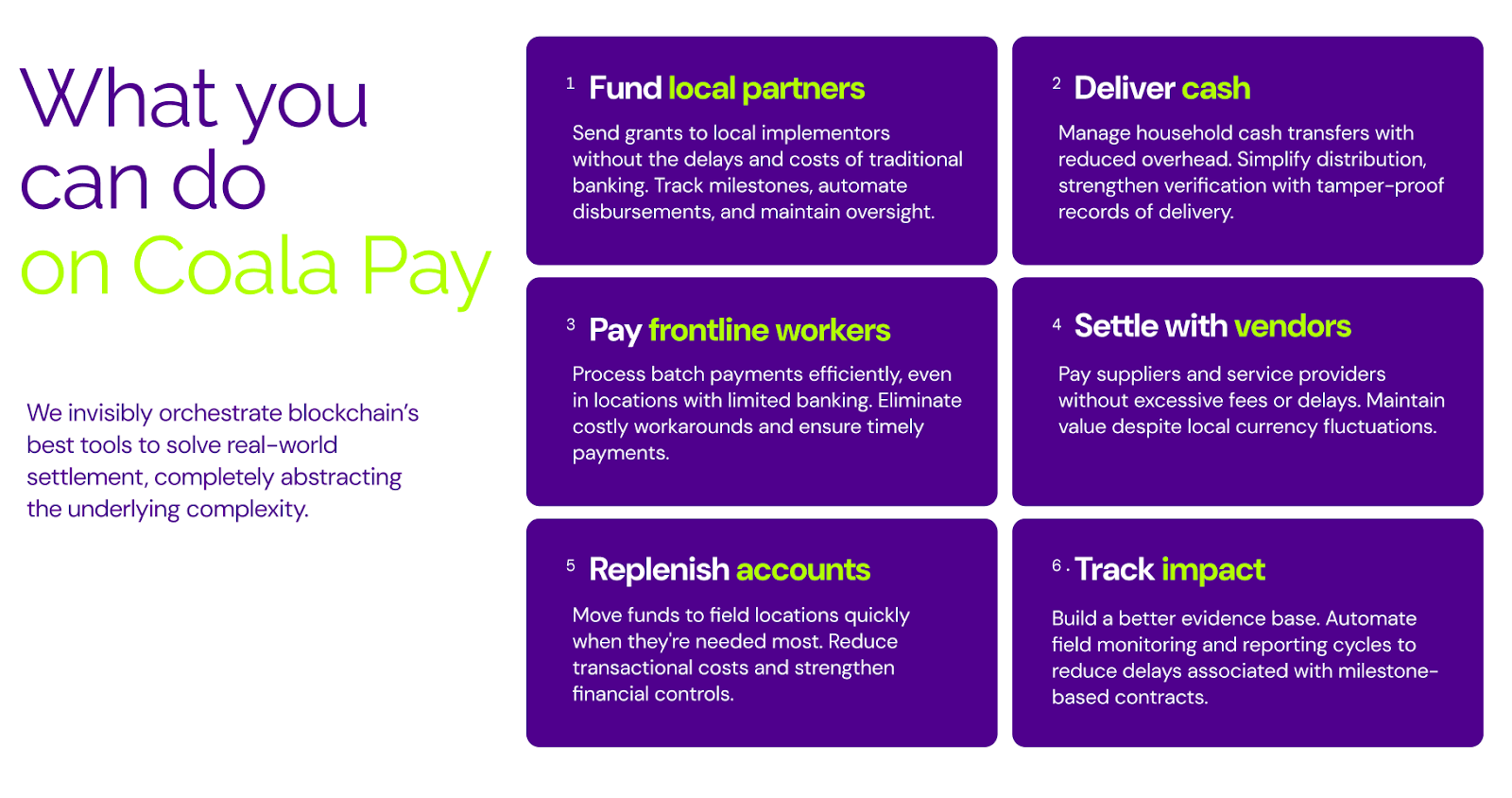
By replacing fragmented legacy banking systems with a single platform, Coala Pay is already demonstrating what faster aid delivery can look like:
100% Success Rate: End-to-end payments from digital wallets to local currency have been completed without failure.
99% Faster Delivery: Settlement times from a treasury account in Europe and the US, to markets such as Darfur, take less than 30 minutes, compared to the 30 days it can take through traditional banking systems, skipping currency fluctuations and hidden fees along the way.
In Kenya, Coala Pay enabled an international NGO to execute 2,000 direct household payments into local M-Pesa accounts in just 30 minutes, without recipients needing to use digital wallets.
What's next?
This year, Coala Pay has won competitively tendered, multi-year framework agreements with some of the world’s largest aid implementers - demonstrating that blockchain payment solutions can outperform traditional financial services providers. As adoption grows and the need to move away from broken legacy systems continues, Melyn, the Founder and CEO of Coala Pay, predicts that within the next three to five years, most people using cross-border payment systems will not even realize their transactions are running on blockchain rails behind the scenes.